For arlanix/notification 1.1.0
Microsoft Teams
A Microsoft Teams subscription sends a topic's messages to one Teams channel. It posts through a workflow, using the URL that Teams makes for it.
You do not set anything up in Stores > Configuration. Each subscription has its own workflow URL.
Workflows are part of Teams for work and school, with a Microsoft 365 account. Teams for personal use, at teams.live.com, has neither channels nor Workflows.
1. Make a workflow
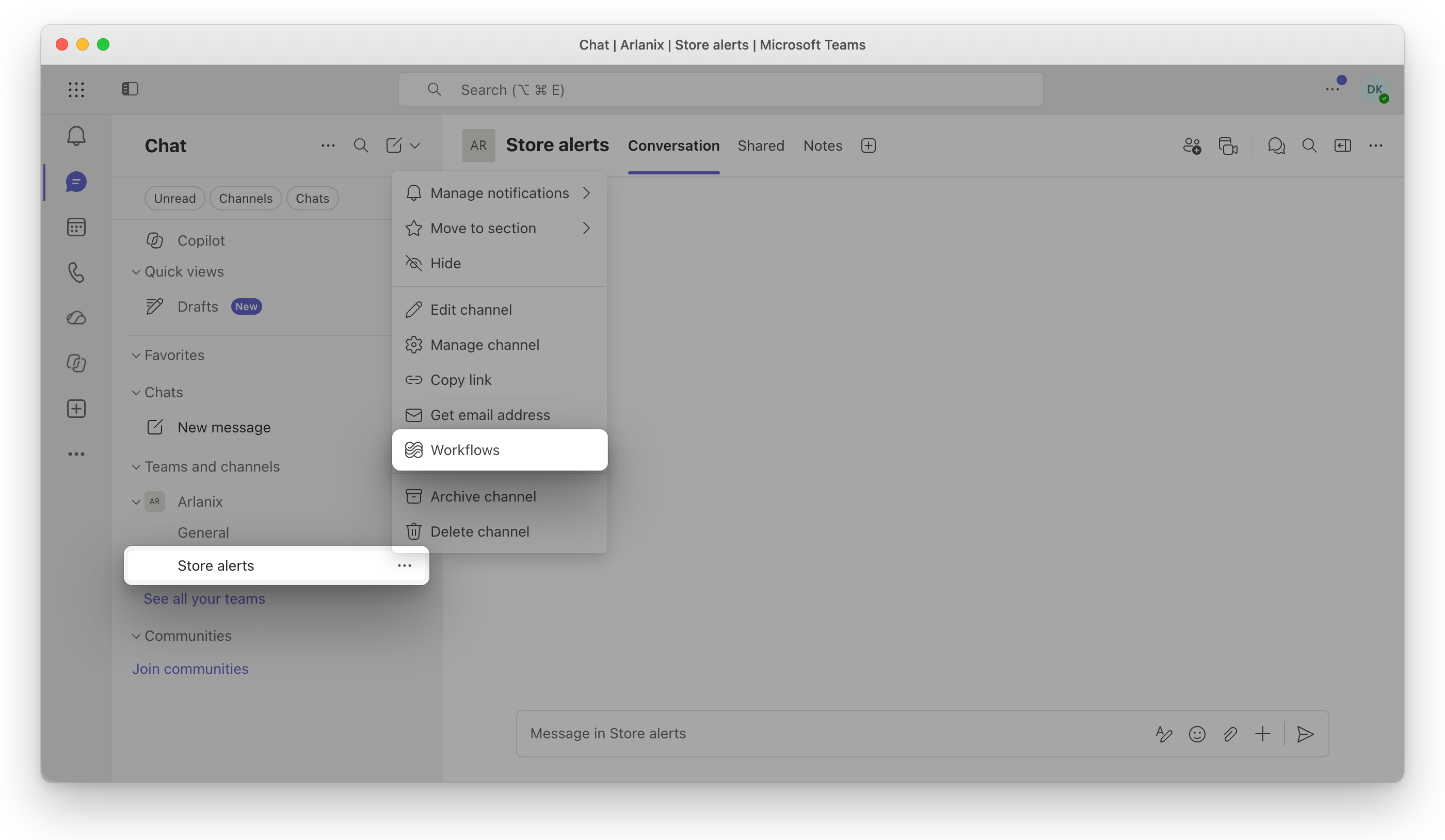
In Teams, open the channel's ••• menu and choose Workflows.
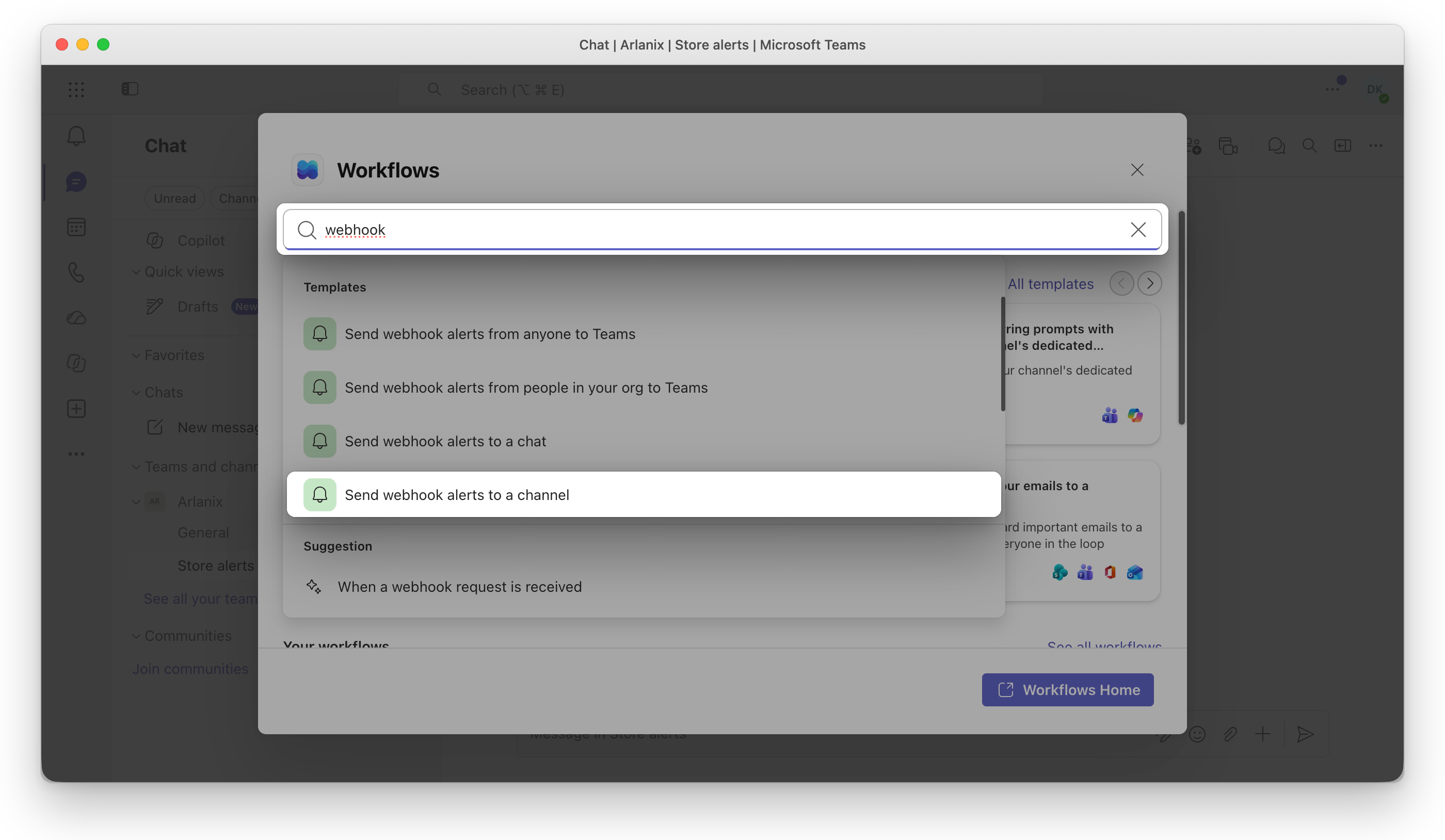
Search for webhook and choose the template Send webhook alerts to a channel.
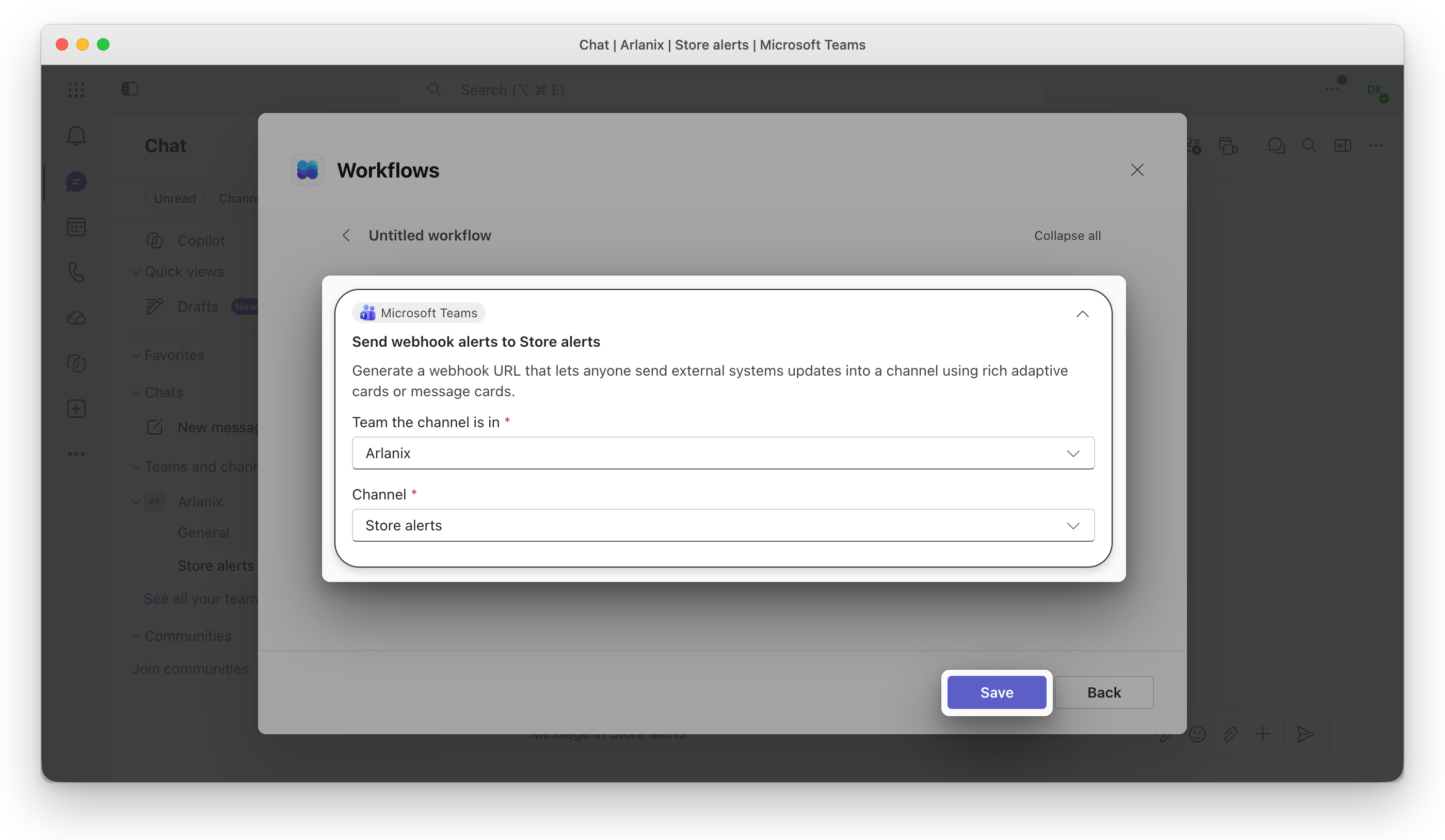
Check the team and the channel, then click Save.
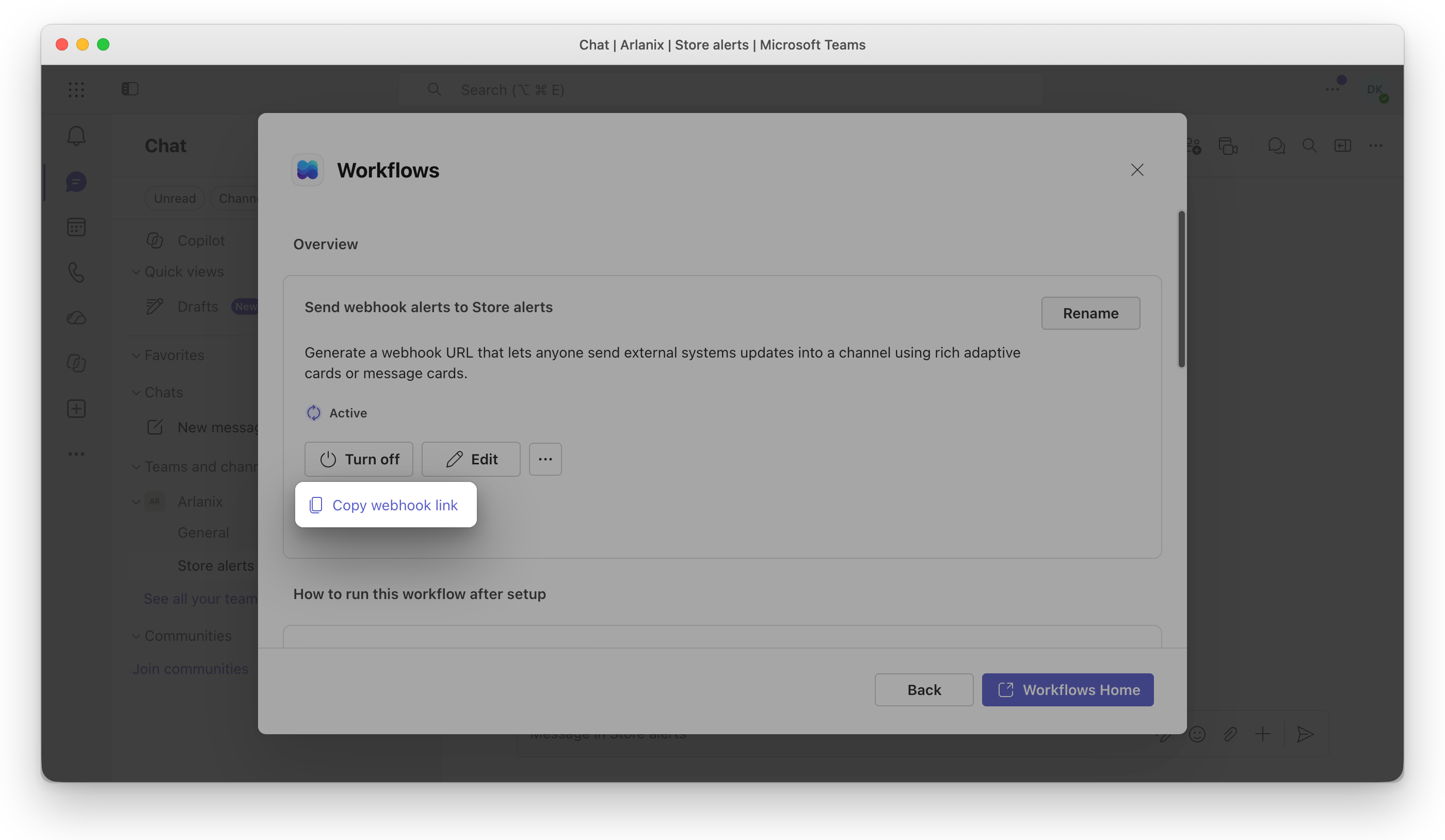
Click Copy webhook link. Keep the URL secret, like a password. Anyone who has it can post to the channel.
To copy the URL again later, open the channel's Workflows. The workflow is under Available in this channel.
Microsoft retired Office 365 connector webhooks. Only Workflows URLs work. Use the link from this workflow, rather than an old connector webhook.
2. Subscribe the channel
Add a subscription on the topic's page or in Subscriptions. See Subscriptions.
Under Delivery, set Delivered by to Microsoft Teams.
Paste the Workflow URL. It is a secret and is never shown again. Its tooltip says “In Teams: the channel's Workflows, the template Send webhook alerts to a channel, then Copy webhook link.”
Enter the Channel, for example Store alerts. The notice says “Such as Store alerts. The grid and the Message Log show it, as they never show the workflow URL.” If you leave it blank, they show Microsoft Teams workflow.
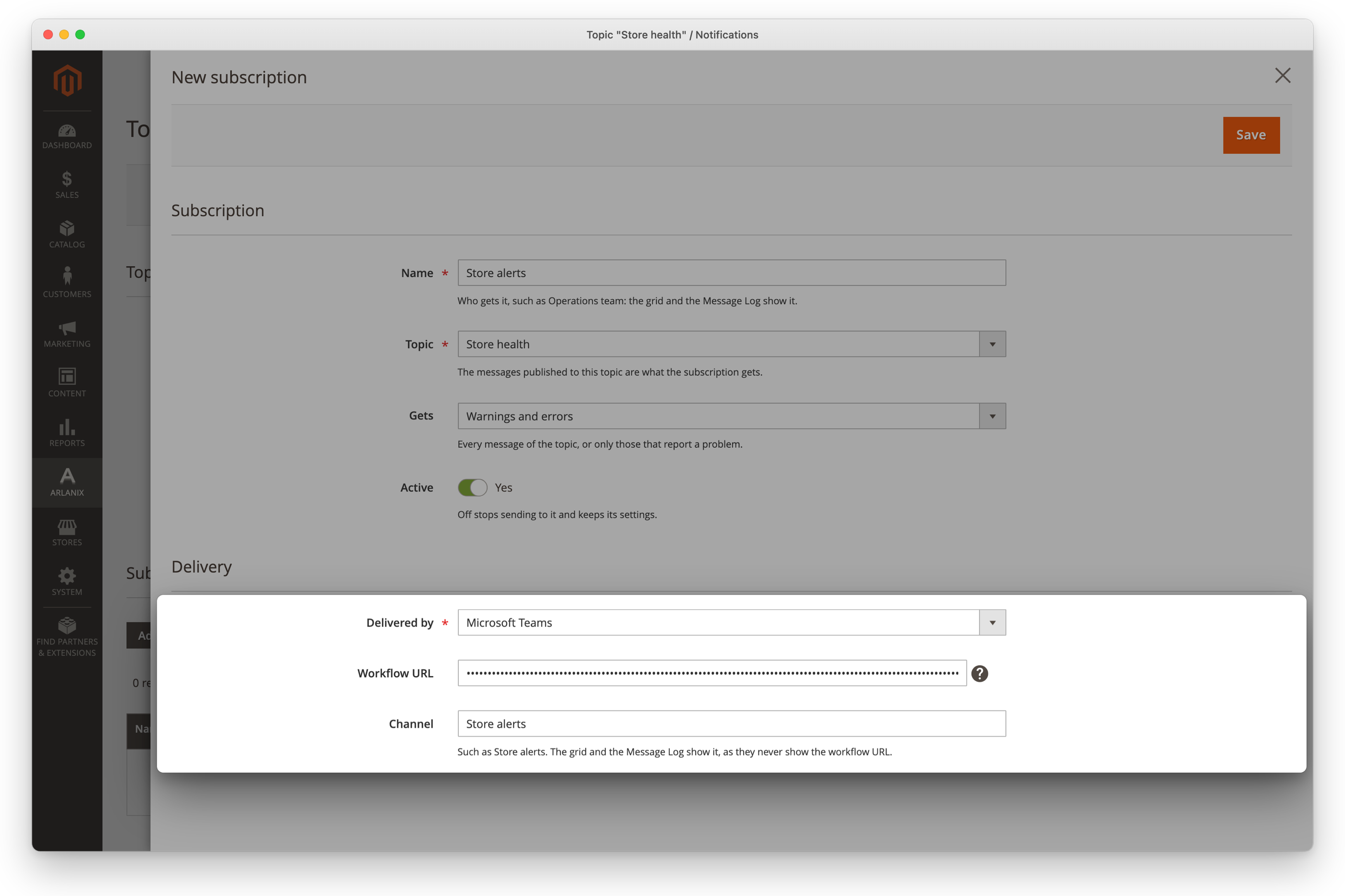
Save the subscription.
Click Send test message. Check that it arrives in the channel.
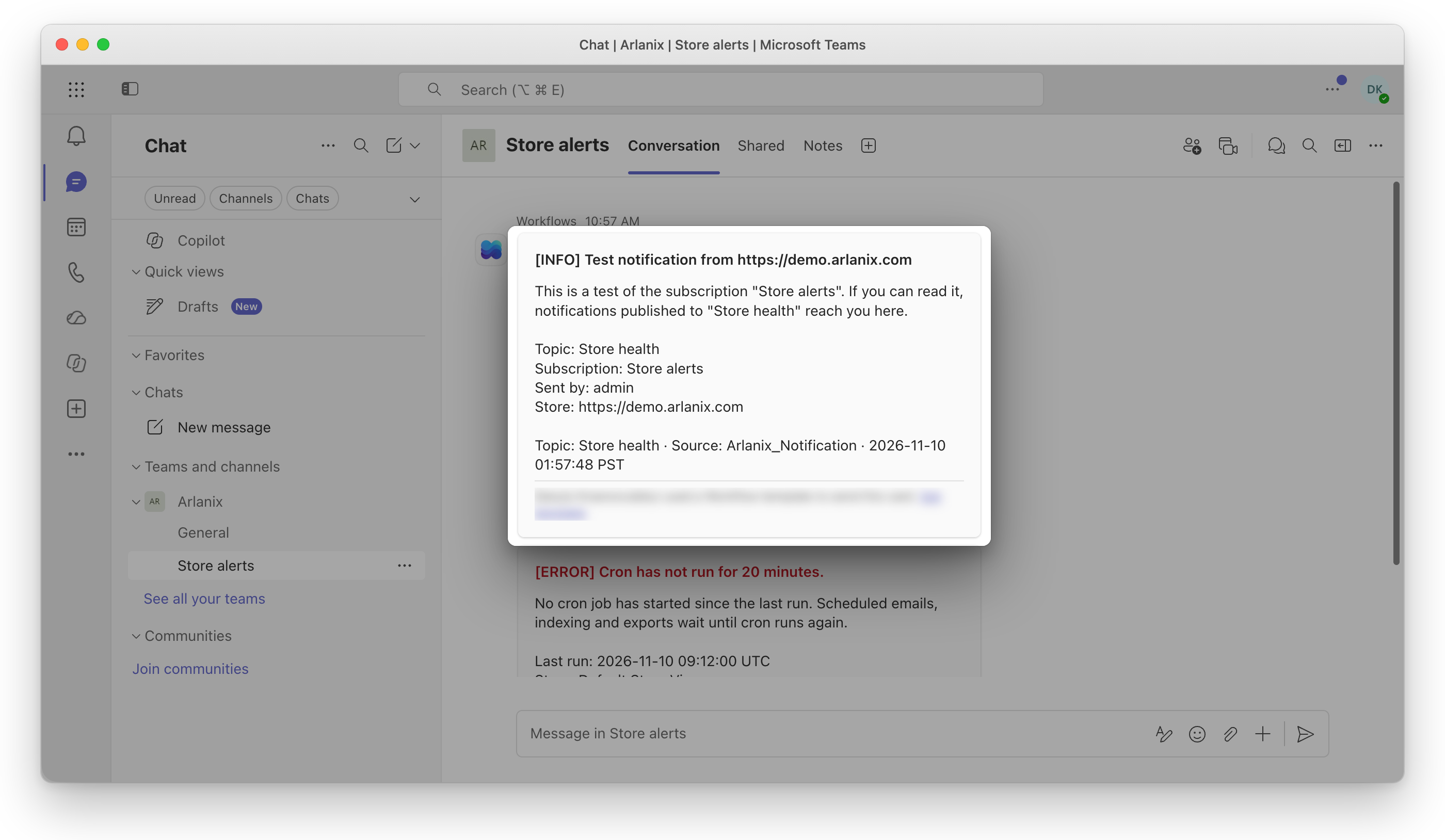
To change the workflow URL later, paste the new one. To keep the stored URL, leave the field blank. The form says “A workflow URL is stored. Leave blank to keep it.”
A topic can have only one subscription to the same workflow URL.
How messages look
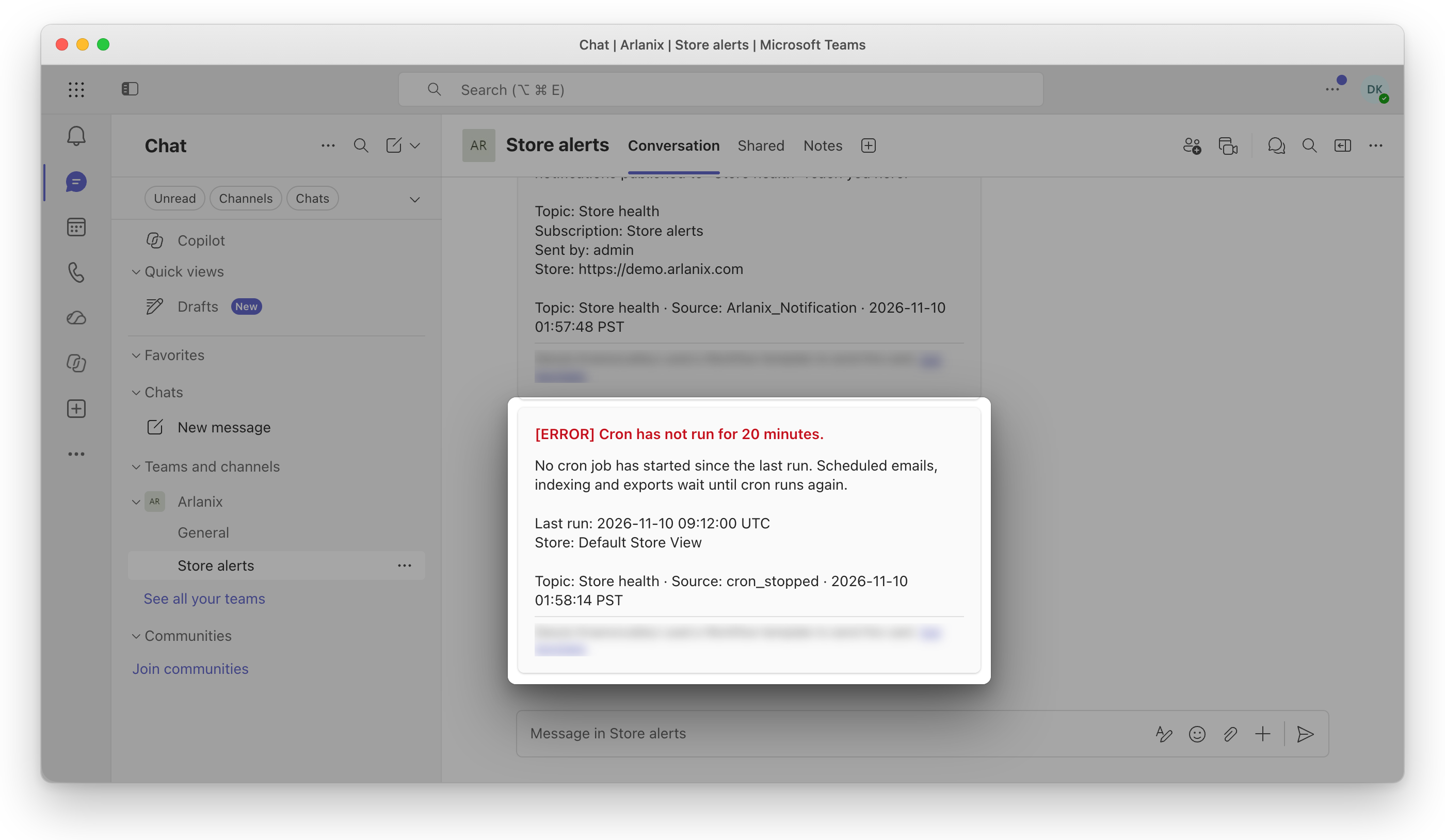
Each delivery is one Adaptive Card in the channel. A digest, several messages sent together, is also one card, with up to 25 different messages. It looks like this:
- The subject is in bold, coloured by severity: red for an error, amber for a warning, and the default text colour for info.
- The body is plain text. Links and markdown in event data appear as text, never as links.
- The last line gives the topic, the source and the time. Under it, Teams names the person who made the workflow.
If a digest is very long, it shows the messages that fit and ends with the number of the others, for example … and 3 more: see the Message Log. A single message that is too long is cut and ends with …. The Message Log keeps every message in full.
When Teams refuses
When Teams refuses a message, its answer appears in Last delivery on the subscription, and on the message's page in the Message Log. Saving can also show a problem before anything is sent. These messages explain what to fix:
| Message | What to do |
|---|---|
| “Enter the Teams workflow URL to post to.” | Paste the workflow's URL into Workflow URL and save. |
| “That is not a Teams workflow URL: copy it with Copy webhook link in the workflow made from the template Send webhook alerts to a channel.” | Copy the URL from the workflow again. It must use HTTPS, a host ending in .environment.api.powerplatform.com or .logic.azure.com, and a path containing /workflows/. It must not contain a username or password. |
| “The subscription has no Teams workflow URL to post to.” | Open the subscription, enter Workflow URL and save. |
| “Teams answered with HTTP status N: the workflow was turned off, deleted or its URL changed. Copy the URL from the workflow again and paste it into the subscription.” | For HTTP 401, 403 or 404, check the workflow in Teams and copy its current URL into the subscription. |
| “Teams asked to wait N second(s): too many messages to the channel at once.” | Teams answered HTTP 429. The store waits as long as Teams asks, one hour at most, and then sends the rest. In the first 24 hours after a message is published, this wait does not use up any of its delivery attempts. |
| “Teams answered with HTTP status N: …” / “Teams answered with HTTP status N.” | Read the text Teams returned, if any, and ask your developer to check the workflow. Secrets in that text are redacted. |
N is the HTTP status or number of seconds; … is the text Teams returned.
The store tries a failed delivery again by itself. See When a delivery fails. To send it again now, click Retry now on the message's page in the Message Log. It is sent within a minute or so.